
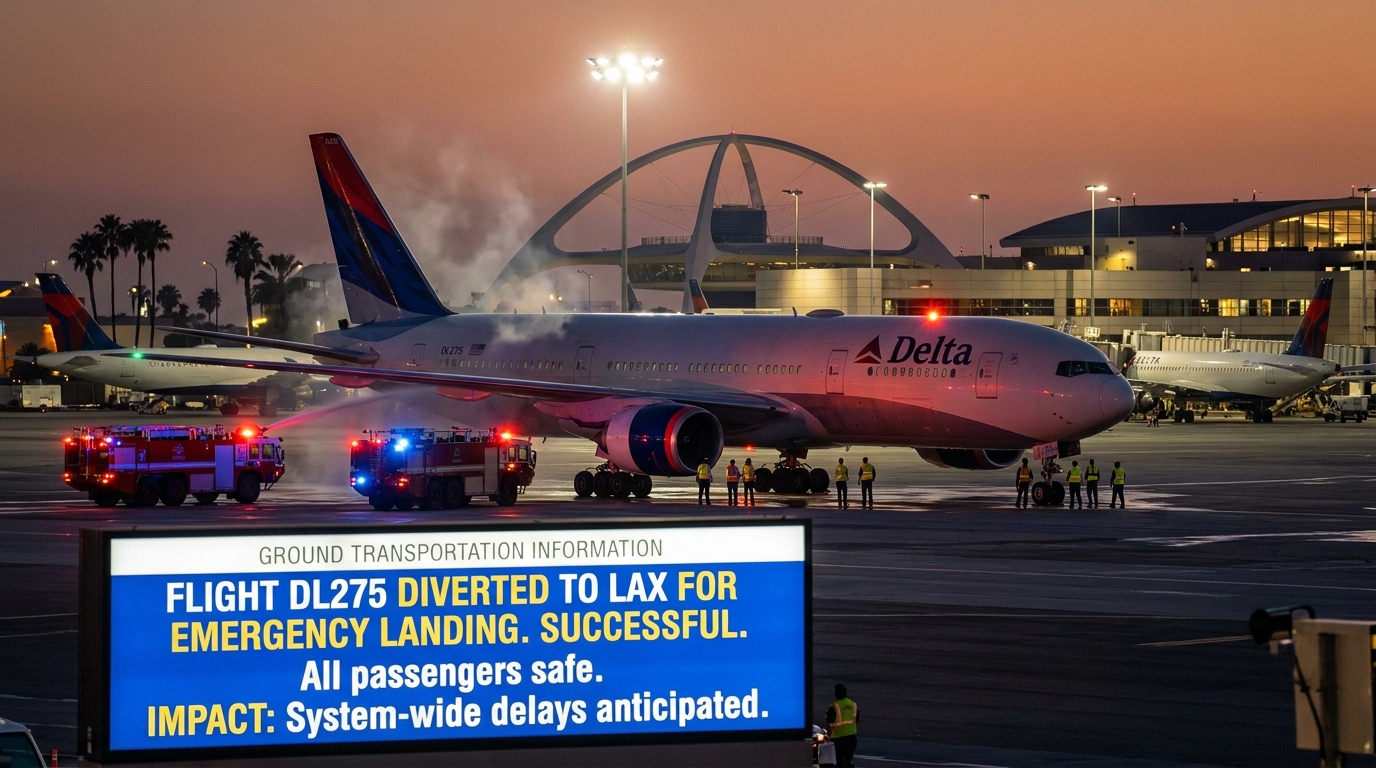
Air travel remains one of the safest forms of transportation in the modern world, yet unexpected situations can still occur during even the most routine flights. One incident that recently gained public attention was the diversion of Delta Flight DL275 to Los Angeles International Airport, commonly known as LAX. The event quickly became a trending topic among travelers, aviation enthusiasts, and news platforms as passengers and observers attempted to understand what caused the diversion and whether anyone was at risk.
Whenever a commercial aircraft changes its planned route and lands unexpectedly at another airport, public concern naturally increases. Many travelers immediately assume the worst, especially in the age of social media where information spreads rapidly before official statements are released. However, aviation diversions are often precautionary measures designed to prioritize passenger safety and minimize operational risks.
The story of Delta Flight DL275 diverted to LAX highlights the importance of airline safety protocols, pilot decision-making, emergency preparedness, and communication between flight crews and air traffic control. While diversions can create inconvenience and anxiety for passengers, they also demonstrate how carefully airlines respond when unexpected technical, medical, or operational issues arise during a journey.
This article explores the full details surrounding Delta Flight DL275, the possible reasons behind the diversion, how aviation procedures work during emergencies, passenger experiences, and what the incident reveals about the broader airline industry.
Understanding Delta Flight -DL275
Delta Air Lines is one of the largest and most recognized airlines in the world. The company operates domestic and international flights across multiple continents and serves millions of passengers every year. Delta has built a strong reputation for safety, operational efficiency, and customer service, which is why any unusual event involving one of its flights immediately attracts attention.
Flight DL275 was operating as a scheduled international route when the aircraft reportedly diverted to Los Angeles International Airport instead of continuing to its original destination. Reports about the diversion began circulating online as passengers shared updates and aviation tracking services showed changes in the aircraft’s route.
Diversions are not uncommon in aviation. Commercial aircraft may divert for several reasons including technical concerns, severe weather, medical emergencies, security issues, or operational limitations. In most cases, these diversions are precautionary and do not indicate immediate danger.
Still, because passengers are often unfamiliar with aviation procedures, sudden changes in flight plans can create stress and confusion. This is especially true on long-haul international flights where travelers may already be exhausted or anxious.
Why Flights Get Diverted
To understand the significance of Delta Flight DL275 diverted to LAX, it is important to understand why diversions happen in general. Airlines do not make diversion decisions lightly because rerouting a commercial aircraft can cost thousands of dollars and disrupt schedules across the airline’s network.
Pilots and airline operations centers constantly monitor aircraft systems, weather conditions, fuel levels, passenger health situations, and airport availability. If any condition creates uncertainty regarding safety or operational reliability, the crew may choose to divert to the nearest suitable airport.
Technical issues are among the most common causes of diversions. Modern aircraft contain advanced monitoring systems that alert pilots to even minor irregularities. Sometimes a warning light or sensor issue may not represent immediate danger, but aviation safety culture encourages crews to act conservatively.
Medical emergencies also frequently lead to diversions. If a passenger or crew member experiences a serious health problem during a flight, pilots may land at the nearest major airport where emergency medical personnel are available.
Weather is another major factor. Thunderstorms, heavy winds, turbulence, fog, or runway visibility problems can make it unsafe to continue toward the planned destination. In such cases, pilots may temporarily divert until conditions improve.
Security concerns, though less common, can also trigger diversions. Airlines and aviation authorities treat any potential security risk seriously, even when the threat later proves harmless.
The Decision to Divert to LAX
Los Angeles International Airport is one of the busiest airports in the United States and serves as a major hub for international aviation. Because of its extensive facilities, long runways, maintenance capabilities, and emergency response infrastructure, LAX is often selected as a diversion airport for flights crossing the Pacific region.
When Delta Flight DL275 diverted to LAX, aviation observers immediately recognized that the airport was a logical choice. Large airports like LAX are equipped to handle unexpected arrivals from international carriers and provide technical inspections, passenger assistance, and logistical support.
The flight crew’s decision would have been based on multiple factors including aircraft status, fuel calculations, weather conditions, maintenance support, and airport readiness. Pilots coordinate closely with air traffic control and airline operations teams before making such decisions.
Importantly, airline crews are trained to prioritize caution over convenience. Even if a problem appears manageable, the safest choice may still be to land and inspect the aircraft rather than continue flying for several more hours.
Passenger Reactions During the Diversion
For passengers onboard Delta Flight DL275, the diversion likely created a mixture of confusion, concern, and uncertainty. Many travelers rely on airline staff for updates during such situations, and communication becomes extremely important.
Passengers often notice unusual events before official announcements are made. Changes in flight direction displayed on seatback maps, sudden altitude adjustments, or emergency vehicle presence after landing can increase anxiety. Social media also plays a major role, as travelers frequently post updates in real time.
Despite the stress associated with diversions, airline crews are trained to maintain calm communication and reassure passengers. Flight attendants play a critical role in managing cabin safety, answering questions, and helping travelers remain composed.
In many cases, passengers later express appreciation for the professionalism of the crew once they understand that the diversion was precautionary. Safety-focused decisions, even when inconvenient, reinforce trust in aviation procedures.
Aviation Safety Culture and Precautionary Landings
One of the most important aspects of the Delta Flight DL275 diverted to LAX incident is the broader lesson it provides about aviation safety culture. Commercial aviation operates under extremely strict international regulations designed to reduce risk as much as possible.
Modern airlines follow the principle that it is always better to overreact than underreact when safety may be involved. Pilots are encouraged to report abnormalities immediately and make conservative decisions without fear of punishment for delays or diversions.
This philosophy has helped make air travel remarkably safe over the decades. Aircraft today are equipped with sophisticated systems capable of detecting minor irregularities long before they become dangerous.
When an aircraft diverts due to a warning indication, the issue may later turn out to be minor. However, the successful outcome itself often demonstrates that safety procedures worked correctly.
Passengers sometimes misunderstand diversions because they expect emergencies to involve visible danger or dramatic events. In reality, the safest aviation incidents are often the ones where crews act early before a situation escalates.
The Role of Air Traffic Control
Air traffic controllers play a vital role during any flight diversion. Once pilots decide to divert, controllers help coordinate the safest and most efficient route toward the alternate airport.
Controllers manage surrounding air traffic, arrange priority landing clearance if necessary, and coordinate emergency services on the ground. At a busy airport like LAX, this process requires significant teamwork and communication.
Because international airports handle heavy traffic volumes, integrating an unexpected arrival into the schedule can be challenging. Nevertheless, airports regularly train for such situations and maintain emergency response plans.
The successful handling of Delta Flight DL275 demonstrates the effectiveness of coordination between pilots, airline operations personnel, airport authorities, and air traffic control teams.
How Airlines Handle Aircraft Inspections After Diversions
After a diverted aircraft lands safely, maintenance teams inspect the plane to identify the source of the issue. Depending on the nature of the problem, inspections can range from quick system checks to detailed engineering evaluations.
If the diversion involved a technical warning, mechanics may examine cockpit data, onboard computers, sensors, hydraulic systems, engines, or electrical components. Safety regulations require airlines to confirm that the aircraft meets all operational standards before returning it to service.
Passengers sometimes become frustrated by long delays after diversions, but these inspections are essential. Airlines cannot simply resume operations until certified maintenance personnel approve the aircraft.
In some cases, passengers may be transferred to another aircraft while repairs are completed. Airlines also arrange accommodations, meals, or alternative travel options depending on the situation and delay duration.
Media Attention and Public Interest
The incident involving Delta Flight DL275 gained widespread attention partly because aviation diversions naturally attract public curiosity. Air travel combines advanced technology, international logistics, and human safety, making any unusual event newsworthy.
Flight tracking websites and social media platforms have increased public visibility into airline operations. Today, people can follow aircraft routes in real time and quickly notice deviations from scheduled flight paths.
This transparency has advantages and disadvantages. While it keeps travelers informed, it can also encourage speculation before verified information becomes available. In many cases, online rumors spread faster than official airline statements.
Responsible reporting is important during aviation incidents. Accurate information helps prevent panic and ensures the public understands the difference between a precautionary diversion and a life-threatening emergency.
Delta Air Lines and Passenger Confidence
For airlines, maintaining passenger confidence after an incident is extremely important. Delta Air Lines has historically emphasized safety and operational reliability, and how the company responds to disruptions can significantly affect public perception.
Passengers generally appreciate transparency, timely communication, and professional customer service following unexpected events. Airlines that respond quickly and prioritize traveler welfare often maintain stronger customer trust even after operational disruptions.
The handling of Delta Flight DL275 likely involved extensive coordination behind the scenes including passenger support, aircraft inspection, crew scheduling, and public communication.
Large airlines invest heavily in training and crisis management because even minor incidents can become major public relations events in the digital era.
The Psychological Impact of Flight Diversions
Even when passengers remain physically safe, diversions can still have emotional effects. Some travelers experience anxiety whenever flight plans suddenly change, especially those who already fear flying.
Unexpected landings may create uncertainty about safety, connecting flights, immigration procedures, or accommodation arrangements. Long waits at airports can further increase stress levels.
Airlines increasingly recognize the importance of psychological reassurance during operational disruptions. Clear communication, calm cabin announcements, and visible professionalism from the crew can significantly reduce passenger anxiety.
For many travelers, learning more about how aviation safety systems work can also provide reassurance. Understanding that diversions are often precautionary helps people view such incidents more rationally rather than emotionally.
What Travelers Can Learn From This Incident
The Delta Flight DL275 diverted to LAX incident serves as a reminder that safety remains the top priority in commercial aviation. While diversions are inconvenient, they are usually signs that aviation systems are functioning correctly.
Travelers can learn several important lessons from such events. First, pilots and airlines make conservative decisions because protecting passengers always comes before maintaining schedules. Second, modern aviation technology allows crews to detect potential problems early. Third, airports and emergency teams continuously train for unexpected situations.
Passengers can also prepare themselves mentally for the possibility of travel disruptions. Carrying essential medications, chargers, snacks, and important documents in carry-on luggage can make unexpected delays more manageable.
Remaining calm and following crew instructions is equally important. Cabin crews are trained professionals whose primary responsibility is passenger safety.
Conclusion
The story of Delta Flight DL275 diverted to LAX reflects the complexity and professionalism of modern aviation operations. Although sudden diversions can create concern among passengers and attract widespread media attention, they are often precautionary measures designed to maintain the highest safety standards.
The incident demonstrates how pilots airline operations teams, air traffic controllers, airport authorities, and maintenance crews work together to protect travelers during unexpected situations. It also highlights the strength of aviation safety culture, where caution and preparedness guide decision-making.
While passengers onboard Delta Flight DL275 may have experienced inconvenience and uncertainty, the safe landing at LAX ultimately reinforces confidence in commercial aviation systems. In the airline industry, successful precautionary actions are evidence that safety protocols are working exactly as intended.
As air travel continues to evolve, incidents like this remind travelers that aviation safety depends not only on technology but also on the expertise, training, and judgment of the people responsible for every flight.