Customer behavior in the retail industry has transformed rapidly over the last few years, and Lowe’s has experienced major shifts in how shoppers interact with the brand. As one of the leading home improvement retailers in the United States, Lowe’s has adapted to changing consumer habits, digital innovation, and economic pressures. Modern customers no longer shop the same way they did a decade ago. They expect convenience, speed, personalization, and flexibility whether they are shopping online or visiting physical stores.
The evolution of customer behavior at Lowe’s reflects broader changes happening across the retail sector. Homeowners, contractors, and DIY enthusiasts now rely heavily on digital research before making purchasing decisions. They compare prices online, read reviews, watch tutorial videos, and expect seamless service across multiple shopping channels. Lowe’s has responded by investing in e-commerce platforms, improving customer engagement strategies, and expanding services designed to meet modern expectations.
Understanding Lowe’s customer behavior changes is important because it reveals how consumer priorities have evolved in the home improvement industry. From increased online shopping to growing demand for sustainable products, these changes are shaping the future of retail and influencing how companies compete in the marketplace.
The Rise of Online Shopping at Lowe’s
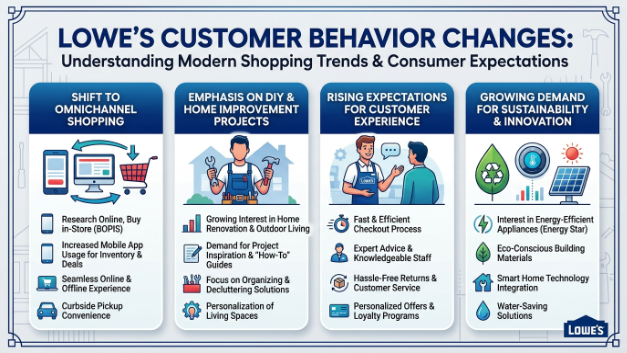
One of the most significant changes in customer behavior at Lowe’s is the dramatic increase in online shopping. Consumers today prefer the convenience of browsing products from home before visiting a store. This trend accelerated during the global pandemic when millions of customers turned to digital platforms for home improvement needs.
Customers now expect Lowe’s to provide a fast and user-friendly online shopping experience. They want accurate product descriptions, detailed images, customer reviews, and easy checkout systems. Many shoppers use mobile devices to compare prices and search for products while standing inside physical stores. This behavior demonstrates how digital and physical shopping experiences have become interconnected.
Lowe’s has invested heavily in its website and mobile applications to accommodate this shift. Features such as curbside pickup, same-day delivery, and real-time inventory tracking have become essential services rather than optional conveniences. Customers increasingly value speed and efficiency, and retailers that fail to provide these features risk losing consumer trust.
Another important trend is the growing popularity of buy-online-pickup-in-store services. Many Lowe’s customers enjoy the convenience of ordering online while avoiding shipping delays. This hybrid shopping model reflects a major transformation in consumer expectations and purchasing habits.
Increased Interest in DIY Home Improvement
Another major shift in Lowe’s customer behavior involves the growing interest in do-it-yourself home improvement projects. Many homeowners now prefer completing renovation and repair tasks independently rather than hiring professionals. This trend became especially popular as people spent more time at home and invested in improving their living spaces.
Customers are increasingly searching for affordable ways to upgrade kitchens, bathrooms, gardens, and outdoor areas. Lowe’s has benefited from this trend by offering tools, materials, and educational content designed for beginner and intermediate DIY users.
Modern consumers do not simply purchase products. They also seek guidance and inspiration. Many Lowe’s customers watch online tutorials, read project guides, and follow home improvement influencers on social media before starting a project. This change shows that consumers value education and confidence during the purchasing process.
The DIY trend has also changed the types of products customers purchase. There is greater demand for beginner-friendly tools, pre-assembled materials, and easy installation products. Lowe’s has adapted by expanding educational resources and simplifying product information for customers who may not have professional experience.
Personalized Shopping Experiences
Modern customers expect personalized experiences when interacting with major retailers like Lowe’s. Generic advertising and broad product recommendations are becoming less effective because consumers prefer content tailored to their specific interests and needs.
Lowe’s customer behavior changes now reflect a stronger desire for personalization across digital and in-store experiences. Customers appreciate targeted promotions, customized recommendations, and loyalty rewards based on their shopping history.
Data analytics and artificial intelligence play an important role in helping Lowe’s understand customer preferences. By analyzing browsing patterns and purchasing behavior, the company can recommend relevant products and provide more meaningful shopping experiences.
Personalization also improves customer loyalty. When consumers feel understood and valued, they are more likely to return for future purchases. Lowe’s has introduced loyalty programs and digital tools that help create stronger relationships with repeat customers.
Modern shoppers also respond positively to personalized communication. Email marketing, mobile notifications, and online advertisements tailored to customer interests often generate higher engagement compared to traditional mass marketing strategies.
The Influence of Smart Home Technology
Customer behavior at Lowe’s has also changed because of growing interest in smart home technology. Consumers increasingly seek products that improve convenience, security, and energy efficiency within their homes.
Smart thermostats, security cameras, lighting systems, and voice-controlled devices have become highly popular among homeowners. Lowe’s customers now view technology as an essential part of modern home improvement rather than a luxury feature.
This shift has encouraged Lowe’s to expand its smart home product offerings and provide educational support for customers unfamiliar with advanced technology. Many shoppers require guidance before purchasing connected devices, especially older consumers who may be less comfortable with smart technology.
The rise of smart homes reflects broader changes in consumer priorities. Customers now focus not only on aesthetics but also on functionality, efficiency, and long-term value. This behavior influences purchasing decisions across multiple product categories.
Younger generations, particularly millennials and Generation Z consumers, are driving demand for smart home solutions. These shoppers are highly comfortable with digital technology and expect retailers like Lowe’s to offer innovative and modern products.
Sustainability and Eco-Friendly Consumer Choices
Environmental awareness has become another major factor influencing Lowe’s customer behavior changes. Modern consumers increasingly prefer sustainable and eco-friendly products that reduce environmental impact.
Many shoppers actively search for energy-efficient appliances, environmentally safe paints, recycled materials, and water-saving fixtures. Customers are more conscious about how products affect both the environment and long-term household expenses.
Lowe’s has responded by promoting sustainable product lines and emphasizing energy-efficient solutions. Customers often choose products with certifications that demonstrate environmental responsibility and reduced energy consumption.
Sustainability also influences brand perception. Consumers are more likely to support companies that demonstrate commitment to environmental responsibility. Lowe’s customers increasingly expect transparency regarding sourcing practices, packaging, and sustainability initiatives.
This behavioral shift reflects a broader cultural movement toward responsible consumption. Customers no longer evaluate products solely based on price and appearance. Ethical considerations now play an important role in purchasing decisions.
Mobile Shopping and Digital Convenience
The rapid growth of smartphone usage has transformed how customers interact with Lowe’s. Mobile shopping is now one of the most important aspects of consumer behavior in modern retail.
Customers frequently use mobile devices to search for product information, compare prices, track orders, and access promotional offers. Many shoppers also rely on store navigation tools and digital payment methods while visiting physical locations.
Lowe’s has adapted by improving its mobile application and digital customer experience. Modern consumers expect websites and apps to function quickly and efficiently across all devices. Slow loading times or confusing interfaces can negatively impact purchasing decisions.
Mobile shopping also supports impulse buying behavior. Customers can quickly browse products, view recommendations, and complete purchases within minutes. This convenience has changed the speed and frequency of consumer purchasing decisions.
Digital convenience has become a major competitive advantage in the retail industry. Customers increasingly favor retailers that provide smooth, hassle-free experiences across online and mobile platforms.
The Importance of Customer Reviews
Modern Lowe’s customers rely heavily on online reviews before purchasing products. Consumer trust has shifted significantly toward peer opinions and shared experiences rather than traditional advertising alone.
Customers frequently read ratings, comments, and product feedback to determine quality and reliability. Positive reviews often increase customer confidence, while negative reviews can discourage purchases.
This behavioral change has made transparency more important than ever. Lowe’s customers expect honest product information and authentic customer feedback. Retailers that hide negative reviews or provide misleading information risk damaging customer trust.
Reviews also influence purchasing behavior in physical stores. Many shoppers research products online before visiting Lowe’s locations, meaning digital reputation directly affects in-store sales.
Social proof now plays a powerful role in consumer decision-making. Customers want reassurance from other buyers before investing in expensive tools, appliances, or renovation materials.
Changing Expectations for Customer Service
Customer service expectations at Lowe’s have evolved significantly in recent years. Modern consumers expect fast responses, knowledgeable staff, and efficient problem resolution across all communication channels.
Customers now interact with brands through email, live chat, social media, phone support, and in-store assistance. They expect consistent service regardless of the communication method they choose.
Speed has become especially important. Consumers are less patient with delays and poor service experiences. Long wait times or unresolved issues can quickly damage customer loyalty and brand reputation.
Lowe’s has adapted by improving customer support systems and investing in digital service solutions. Automated chat tools, online order tracking, and self-service options have become essential features in modern retail operations.
Consumers also appreciate knowledgeable employees who can provide expert advice for home improvement projects. Personalized guidance remains valuable despite the growth of digital shopping platforms.
Economic Factors Influencing Customer Behavior
Economic conditions also play a major role in Lowe’s customer behavior changes. Inflation, housing market trends, and economic uncertainty influence how consumers spend money on home improvement projects.
During periods of financial uncertainty, customers often prioritize essential repairs over luxury renovations. Price sensitivity increases, and consumers become more focused on discounts, promotions, and value-based purchasing decisions.
At the same time, some homeowners choose to improve existing properties instead of purchasing new homes. This behavior can increase demand for renovation materials and home improvement products.
Lowe’s customers are also more likely to compare prices across multiple retailers before making large purchases. Competitive pricing and promotional offers have become increasingly important in attracting budget-conscious shoppers.
Economic pressures encourage consumers to seek durable and cost-effective products that provide long-term value. This shift affects purchasing behavior across appliances, tools, furniture, and building materials.
Social Media and Consumer Influence
Social media platforms have dramatically influenced Lowe’s customer behavior. Consumers frequently discover home improvement ideas, product recommendations, and design inspiration through platforms such as Instagram, YouTube, and TikTok.
Home renovation influencers and DIY content creators shape consumer preferences by demonstrating projects and recommending products. Many Lowe’s customers now enter stores with specific inspiration gathered from online content.
Visual content plays a powerful role in purchasing decisions. Customers are more likely to purchase products after seeing real-life examples and transformation projects shared on social media.
This trend has encouraged Lowe’s to strengthen its digital marketing presence and collaborate with online creators. Consumers increasingly trust relatable content creators who provide honest demonstrations and practical advice.
Social media has also increased customer engagement with brands. Consumers now expect interactive communication, fast responses, and visually appealing content from retailers.
The Future of Lowe’s Customer Behavior
The future of Lowe’s customer behavior will likely continue evolving alongside technological innovation and changing consumer expectations. Artificial intelligence, augmented reality, and smart shopping tools may further transform the retail experience.
Customers increasingly seek convenience, personalization, and flexibility in every aspect of shopping. Retailers that successfully combine digital innovation with strong customer service will remain competitive in the evolving marketplace.
Younger generations are expected to continue influencing retail trends, particularly in areas such as sustainability, smart technology, and online engagement. Their preferences will shape future product offerings and marketing strategies.
Lowe’s will likely continue investing in omnichannel experiences that connect online shopping with physical stores. Consumers no longer separate digital and in-person shopping into distinct experiences. Instead, they expect seamless integration between both environments.
As customer behavior continues to evolve, adaptability will remain essential for success. Retailers that understand changing consumer priorities can build stronger customer relationships and maintain long-term growth.
Conclusion
Lowe’s customer behavior changes reflect major transformations happening throughout the retail and home improvement industries. Consumers today prioritize convenience, personalization, sustainability, and digital accessibility more than ever before. Online shopping, mobile technology, smart home products, and DIY culture have significantly altered how customers interact with retailers.
Modern shoppers expect seamless experiences across multiple channels, fast customer service, and personalized recommendations that match their interests. Social media, customer reviews, and economic conditions also play important roles in shaping purchasing decisions.
Lowe’s has adapted to these evolving expectations by investing in technology, improving digital experiences, and expanding product offerings that align with modern consumer trends. As customer behavior continues to evolve, the company’s ability to innovate and respond to changing demands will remain essential for long-term success in the competitive retail market.