
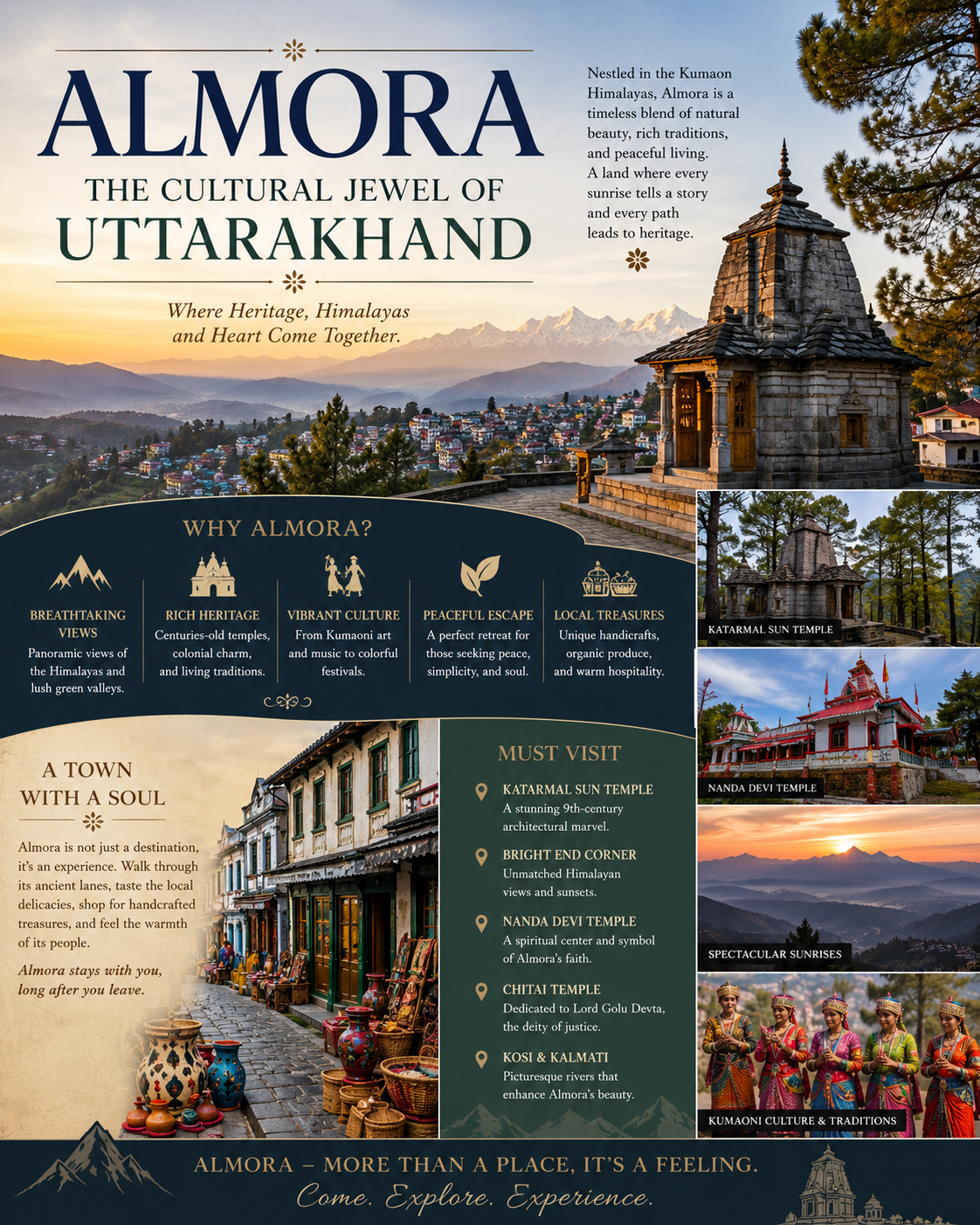
Almora is one of the most beautiful and culturally rich hill stations in the Indian state of Uttarakhand. Surrounded by the majestic Himalayas, this charming town is famous for its scenic landscapes, traditional culture, ancient temples, and peaceful environment. Located in the Kumaon region, Almora has attracted travelers, writers, nature lovers, and spiritual seekers for many years. The town offers a perfect blend of history, spirituality, and natural beauty, making it one of the most important tourist destinations in northern India.
The beauty of Almora lies not only in its mountains and forests but also in its unique traditions and warm local culture. Unlike crowded modern cities, Almora provides a calm and refreshing atmosphere where visitors can enjoy nature and experience traditional Himalayan life. The town is also known for its handicrafts, local cuisine, and religious importance. Over the years, Almora has become a symbol of peace and cultural heritage in Uttarakhand.
History of Almora
The history of Almora dates back several centuries and is deeply connected with the Kumaon region. Almora was established in 1568 by King Kalyan Chand of the Chand dynasty. Before the Chand rulers, the area was controlled by the Katyuri kings, who were among the oldest ruling dynasties in Uttarakhand. The Chand rulers developed Almora as their capital because of its strategic location and pleasant climate.
During the rule of the Chand dynasty, Almora became a center of art, culture, and trade. Temples, markets, and administrative buildings were constructed, many of which still reflect the traditional architecture of the region. Later, the Gurkhas invaded Kumaon and ruled Almora for some time before the British took control in the early nineteenth century.
Under British rule, Almora developed further as a peaceful hill station. The British admired the beauty and climate of the town and used it as a retreat from the heat of the plains. Many educational institutions and roads were established during this period, helping the town grow socially and economically.
Natural Beauty of Almora
One of the main attractions of Almora is its breathtaking natural beauty. The town is situated on a horseshoe-shaped ridge surrounded by pine and oak forests. Snow-covered Himalayan peaks can be seen from different parts of the town, creating a magical view especially during sunrise and sunset.
The clean air, green hills, and peaceful atmosphere make Almora an ideal destination for people looking to escape busy city life. Nature lovers enjoy walking through forest trails, watching birds, and exploring the nearby valleys and rivers. The region experiences pleasant summers, colorful monsoons, and cold winters, each season adding a different charm to the landscape.
Nearby places such as Bright End Corner, Deer Park, and Kalimath offer excellent views of the Himalayas. These scenic spots attract photographers and tourists who want to experience the untouched beauty of the Kumaon hills.
Cultural Importance of Almora
It is considered the cultural heart of the Kumaon region. The town has preserved its traditional customs, music, dance, and festivals for generations. Local people take great pride in their heritage and continue to celebrate ancient traditions with enthusiasm.
Traditional Kumaoni music and dance forms are an important part of local festivals and celebrations. Folk songs often reflect the beauty of nature, village life, and spiritual beliefs. Cultural fairs and events are organized throughout the year, bringing communities together and attracting visitors from different regions.
The local language spoken in Almora is Kumaoni, although Hindi is also widely used. The people of Almora are known for their hospitality and simple lifestyle. Visitors often appreciate the warmth and friendliness of the local communities.
Famous Temples in Almora
Almora is home to several ancient temples that hold religious and historical significance. These temples attract pilgrims and tourists throughout the year and showcase the spiritual heritage of the region.
Nanda Devi Temple
The Nanda Devi Temple is one of the most famous temples in Almora. Dedicated to Goddess Nanda Devi, the temple is an important center of worship in the Kumaon region. The annual Nanda Devi Fair attracts thousands of devotees and tourists who come to participate in religious ceremonies and cultural events.
Chitai Golu Devta Temple
The Chitai Golu Devta Temple is another popular religious site near Almora. Golu Devta is worshipped as the god of justice, and devotees often hang bells and written prayers in the temple. The temple is famous for its peaceful surroundings and unique traditions.
Kasar Devi Temple
Kasar Devi Temple is known not only for its spiritual importance but also for its connection with meditation and positive energy. Many spiritual seekers and travelers visit this temple for peace and self-reflection. The area around Kasar Devi has also attracted famous personalities and writers from around the world.
Tourism in Almora
Tourism plays a major role in the economy of Almora. Every year, thousands of visitors come to enjoy the natural beauty, spiritual atmosphere, and cultural richness of the town. Almora offers a peaceful alternative to crowded tourist destinations and provides visitors with a chance to connect with nature.
Adventure lovers can enjoy trekking, hiking, and camping in the surrounding hills and forests. Nearby tourist destinations such as Binsar Wildlife Sanctuary, Jageshwar Temple Complex, and Ranikhet are easily accessible from Almora and add to the appeal of the region.
Tourists also enjoy shopping in the local markets where traditional handicrafts, woolen clothes, candles, and decorative items are available. Handmade products from Almora reflect the artistic skills of local craftsmen and are popular among visitors.
Traditional Food of Almora
The traditional cuisine of Almora reflects the culture and lifestyle of the Kumaon region. Local food is simple, nutritious, and full of unique flavors. Many dishes are prepared using locally grown grains, vegetables, and spices.
Popular dishes include Bhatt ki Churkani, Aloo ke Gutke, Chainsoo, and Kafuli. These dishes are known for their traditional preparation methods and authentic taste. Almora is also famous for its sweet dish called Bal Mithai, which is loved by both locals and tourists.
The food culture of its represents the close connection between people and nature. Fresh ingredients and homemade recipes continue to play an important role in daily life.
Education and Literature in Almora
Almora has a strong tradition of education and literature. Over the years, the town has produced many scholars, writers, artists, and social reformers. Educational institutions in the region have contributed to the intellectual and cultural development of Uttarakhand.
The peaceful environment of Almora has inspired poets and writers for generations. Many literary works have been influenced by the beauty of the Himalayas and the spiritual atmosphere of the region. Libraries, schools, and cultural centers continue to promote education and creativity among young people.
Wildlife and Environment
The forests and natural surroundings of its are home to rich biodiversity. The region supports various species of birds, animals, and plants. Pine forests, rivers, and mountain ecosystems create an ideal habitat for wildlife.
Binsar Wildlife Sanctuary, located near Almora, is one of the most important protected areas in Uttarakhand. It is famous for its scenic beauty and wildlife, including leopards, deer, and many bird species. Environmental conservation is becoming increasingly important as tourism and development continue to grow.
Local communities and environmental organizations are working to protect forests, reduce pollution, and preserve the natural beauty of the region for future generations.
Modern Development in Almora
Although it is deeply connected with tradition, the town is also moving toward modern development. Improved roads, educational institutions, healthcare facilities, and tourism services have contributed to the growth of the area.
At the same time, efforts are being made to maintain the cultural identity and environmental balance of the region. Sustainable tourism and eco-friendly practices are becoming more important in protecting the heritage of Almora.
Young people in Almora are increasingly involved in education, technology, and entrepreneurship while still respecting local traditions. This balance between modern progress and cultural preservation makes Almora unique among hill towns in India.
Why Almora is Special
Almora is special because it offers something beyond ordinary tourism. It is a place where history, spirituality, nature, and culture exist together in harmony. Visitors can experience peaceful mountain life while learning about the traditions and heritage of the Kumaon region.
The calm atmosphere, beautiful landscapes, and friendly people leave a lasting impression on anyone who visits the town. Whether someone is interested in adventure, spirituality, photography, or relaxation, Almora provides a meaningful and memorable experience.
The town also serves as a reminder of the importance of preserving natural beauty and cultural heritage in a rapidly changing world. Almora continues to inspire travelers with its simplicity and timeless charm.
Conclusion
Its stands as one of the most beautiful and culturally significant towns in Uttarakhand. Its rich history, ancient temples, natural landscapes, and vibrant traditions make it a remarkable destination in the Himalayan region. The town offers peace, inspiration, and a deep connection with nature that attracts visitors from across India and beyond.
As tourism and development continue to grow, preserving the cultural and environmental heritage of Almora remains essential. The beauty of this hill town lies in its ability to maintain harmony between tradition and modernity. Almora is not just a tourist destination; it is a symbol of the cultural spirit and natural beauty of the Kumaon Himalayas.