
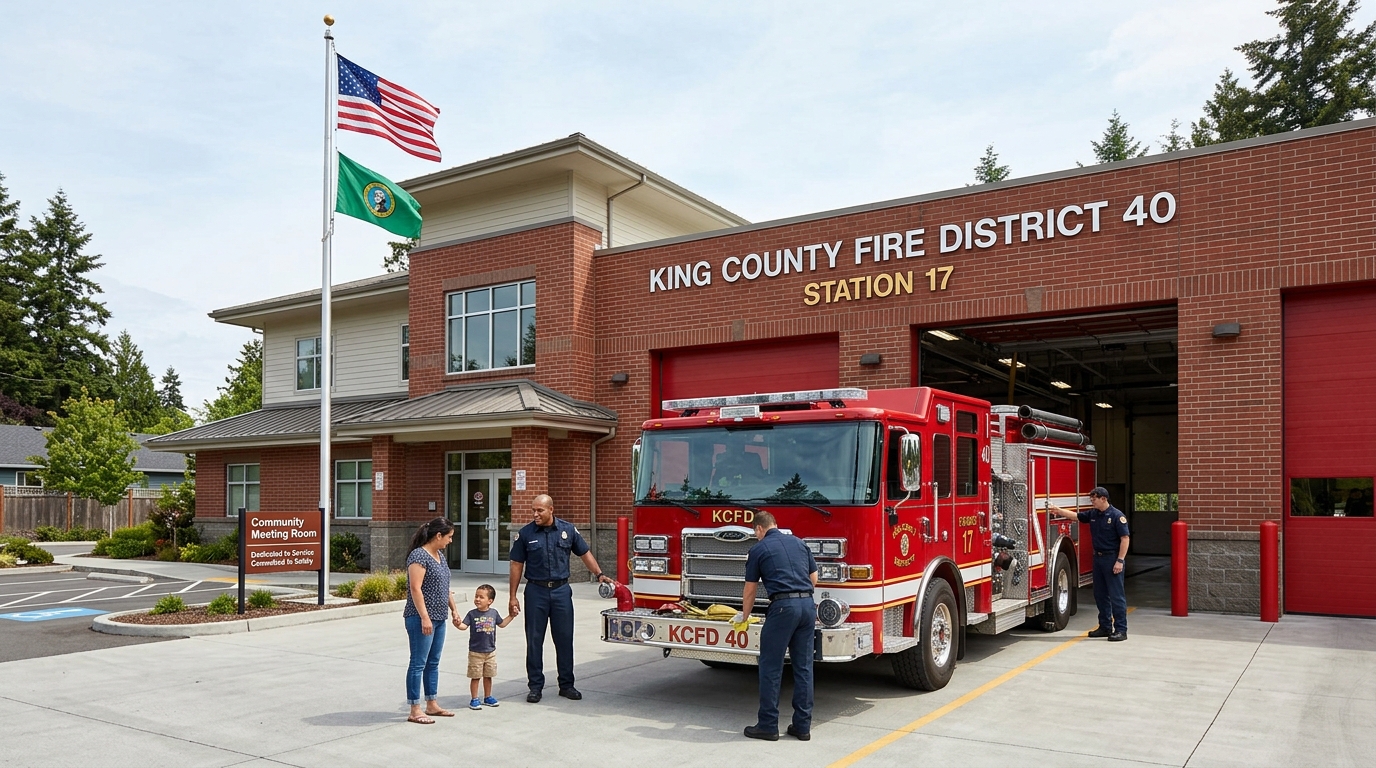
King County Fire District 40 Station 17 plays an important role in protecting communities through emergency response, firefighting services, rescue operations, and public safety programs. Fire stations are more than buildings that house fire trucks and emergency equipment. They are centers of safety, rapid response, and community trust. Station 17 represents the commitment of trained firefighters and emergency responders who dedicate their lives to protecting people during emergencies and disasters.
Across the United States, local fire districts are essential for maintaining public safety, and King County Fire District 40 Station 17 stands as an example of professionalism and preparedness. From handling structure fires to medical emergencies and disaster response, the station serves the surrounding area with skill, teamwork, and dedication. The importance of modern fire stations has grown significantly in recent years because communities depend on quick emergency services during accidents, fires, severe weather, and rescue situations.
This article explores the role, operations, history, services, and community impact of King County Fire District 40 Station 17 while highlighting why fire stations remain one of the most respected public service institutions in modern society.
The History of King County Fire District 40 Station 17
The development of fire districts in King County reflects the growing need for organized emergency services as communities expanded over time. Fire protection originally depended on volunteer groups with limited equipment and resources. As populations increased and urban development expanded, local governments recognized the need for professional fire departments equipped with modern tools and trained personnel.
King County Fire District 40 became part of this broader effort to improve emergency response capabilities in Washington State. Station 17 emerged as an important operational center responsible for protecting residential neighborhoods, businesses, and public infrastructure. Over the years, advancements in firefighting technology, communication systems, and emergency medical training transformed the station into a modern facility capable of handling complex emergencies.
The history of Station 17 also reflects the evolution of firefighting itself. Earlier firefighting methods focused mainly on extinguishing fires, but modern departments now manage medical emergencies, hazardous material incidents, vehicle rescues, and disaster preparedness programs. The station has adapted to changing public safety needs while continuing to provide reliable emergency support to the community.
The Role of Firefighters at Station 17
Firefighters at King County Fire District 40 Station 17 perform demanding and highly skilled work every day. Their responsibilities extend far beyond fighting fires. They respond to medical emergencies, road accidents, rescue operations, and natural disasters while ensuring the safety of residents and visitors.
Modern firefighters undergo extensive physical and technical training. They learn how to operate firefighting equipment, provide emergency medical care, conduct rescues, and manage hazardous situations. The team at Station 17 must remain prepared at all times because emergencies can occur without warning.
One of the most important aspects of firefighting is teamwork. Firefighters rely on communication, coordination, and trust when responding to dangerous incidents. Every member of the station has a specific role during emergency operations, ensuring that response efforts remain organized and efficient.
The physical demands of the profession are significant. Firefighters often work long shifts, face extreme temperatures, and operate in stressful environments. Despite these challenges, the personnel at Station 17 continue to serve their community with professionalism and courage.
Emergency Medical Services and Rapid Response
Emergency medical services have become one of the primary responsibilities of many fire stations, including Station 17. Medical emergencies often require immediate assistance before patients can be transported to hospitals. Firefighters trained as emergency medical technicians provide lifesaving care during critical moments.
The rapid response capability of Station 17 can make a major difference during emergencies such as heart attacks, strokes, severe injuries, or breathing problems. Quick medical intervention increases survival rates and improves patient outcomes. Firefighters arrive equipped with medical tools, defibrillators, oxygen supplies, and emergency treatment equipment.
Emergency calls can involve a wide variety of situations. Some incidents include vehicle collisions, falls, industrial accidents, or sudden illnesses. Firefighters must assess the scene quickly, protect victims, and coordinate with ambulance teams or hospitals.
The ability to provide both firefighting and medical services makes Station 17 a valuable part of the community’s emergency response network. Residents depend on trained emergency responders who can react quickly and professionally during life-threatening situations.
Fire Prevention and Public Education
One of the most effective ways to protect communities is through fire prevention and public education. King County Fire District 40 Station 17 works to reduce fire risks by teaching residents about safety practices, emergency preparedness, and hazard awareness.
Public education programs may include school visits, fire safety demonstrations, smoke alarm awareness campaigns, and community outreach events. These programs help people understand how to prevent fires and respond safely during emergencies.
Fire prevention officers also inspect buildings and properties to ensure compliance with safety regulations. Inspections help identify hazards such as faulty wiring, blocked exits, or unsafe storage of flammable materials. Preventing emergencies before they occur is one of the most important responsibilities of modern fire departments.
Children often benefit greatly from fire safety education. Learning how to escape safely during a fire, call emergency services, and understand fire hazards can save lives. Station 17 contributes to building a safer community through continuous educational efforts.
Advanced Equipment and Technology
Modern fire stations rely on advanced technology and specialized equipment to respond effectively to emergencies. Station 17 uses firefighting vehicles, rescue tools, communication systems, and protective gear designed to improve efficiency and firefighter safety.
Fire engines carry water pumps, hoses, ladders, breathing apparatus, and emergency medical equipment. Rescue vehicles may include hydraulic tools used during vehicle extrications or technical rescues. Protective clothing shields firefighters from heat, smoke, and hazardous environments.
Communication technology is also essential for emergency operations. Dispatch systems allow firefighters to receive information quickly and coordinate with other emergency agencies. GPS systems, digital radios, and incident management software improve response times and operational effectiveness.
The use of modern technology has transformed firefighting in recent decades. Thermal imaging cameras help firefighters locate victims in smoke-filled environments, while drones and advanced mapping systems support search and rescue missions during large-scale incidents.
Community Trust and Public Service
Firefighters consistently rank among the most trusted professionals in society because of their dedication to helping others during emergencies. Station 17 represents this tradition of public service and community commitment.
Residents often see firefighters not only as emergency responders but also as neighbors and community partners. Fire stations participate in local events, educational programs, and public safety campaigns that strengthen relationships with the community.
Trust is especially important during emergencies when people rely on firefighters for guidance and protection. The professionalism, discipline, and compassion shown by emergency responders help build confidence and reassurance among residents.
Community engagement also encourages cooperation between citizens and emergency services. When residents understand fire safety practices and emergency preparedness, communities become more resilient and better equipped to handle disasters.
Challenges Faced by Modern Fire Stations
Fire stations across the country face a variety of operational challenges, and Station 17 is no exception. Growing populations, increasing emergency call volumes, and evolving safety threats require constant adaptation and planning.
One challenge involves balancing resources with rising service demands. Firefighters must handle a wide range of emergencies while maintaining equipment readiness and ongoing training. Budget limitations can also affect staffing, technology upgrades, and facility maintenance.
Another major challenge is dealing with natural disasters and climate-related emergencies. Wildfires, severe storms, flooding, and extreme weather events place additional pressure on emergency response systems. Firefighters must prepare for situations that require rapid large-scale coordination.
Mental and physical stress also affects firefighters due to the demanding nature of their work. Departments increasingly recognize the importance of mental health support, wellness programs, and recovery resources for emergency personnel.
Despite these difficulties, Station 17 continues to fulfill its mission through teamwork, training, and dedication to public safety.
The Importance of Preparedness and Training
Training is one of the foundations of successful emergency response operations. Firefighters at Station 17 regularly participate in drills, simulations, and educational programs designed to improve their skills and readiness.
Preparedness involves more than technical knowledge. Firefighters must develop leadership abilities, decision-making skills, and the ability to remain calm under pressure. Training exercises prepare responders for real-world emergencies where quick thinking and coordination are essential.
Disaster preparedness also extends to the community. Fire stations encourage residents to create emergency plans, maintain safety equipment, and understand evacuation procedures. Prepared communities are better able to respond during crises and reduce the impact of emergencies.
Continuous training ensures that firefighters remain updated on new technologies, rescue techniques, and medical procedures. This commitment to learning helps maintain high standards of emergency service and operational excellence.
Conclusion
King County Fire District 40 Station 17 serves as a critical pillar of community safety and emergency response. Through firefighting operations, medical services, rescue missions, and public education, the station protects lives and property while supporting the well-being of residents.
The dedication of firefighters and emergency responders demonstrates the importance of courage, teamwork, and public service in modern society. Station 17 represents more than an emergency facility. It symbolizes preparedness, trust, and the commitment to helping others during times of crisis.
As communities continue to grow and face new challenges, fire stations like Station 17 will remain essential to public safety. Their ability to adapt, educate, and respond quickly ensures that residents receive reliable protection and support when emergencies occur.