
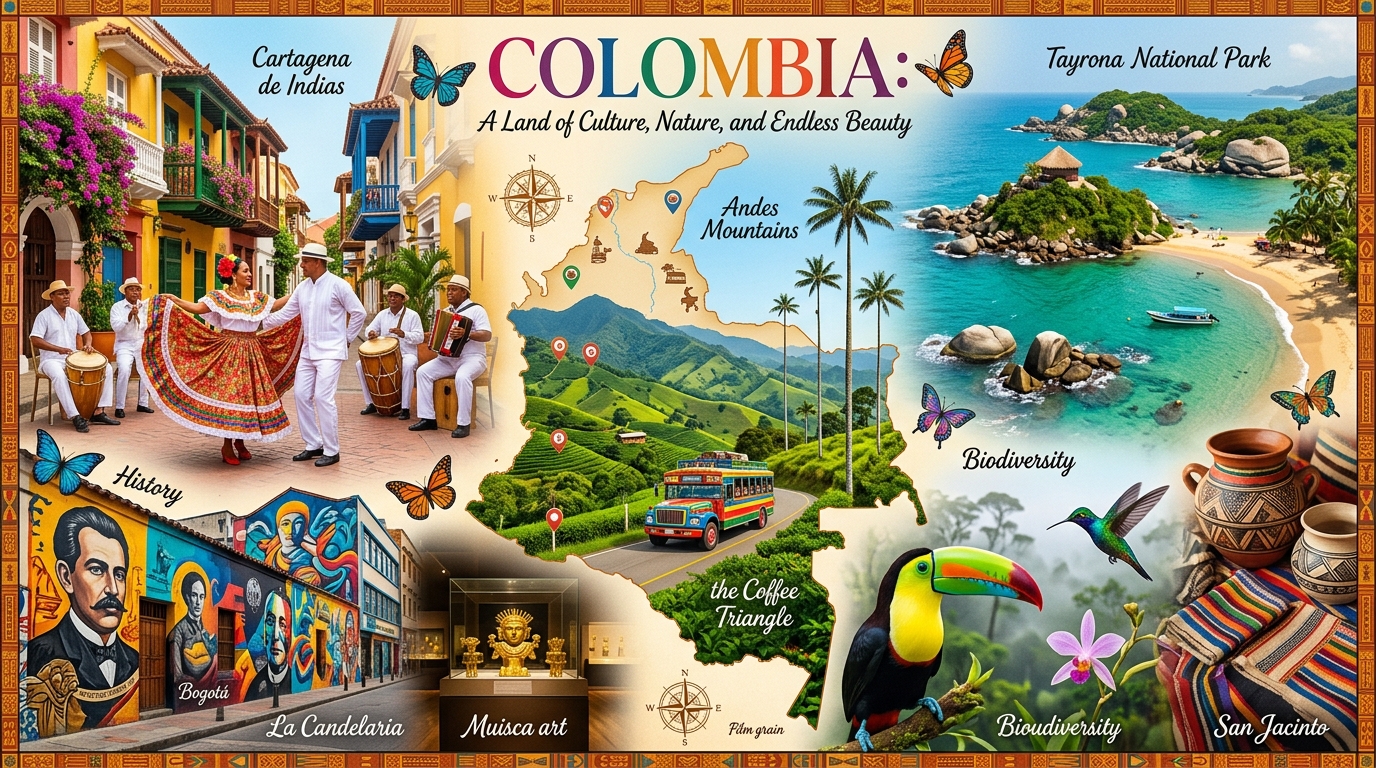
Colombia is one of the most beautiful and culturally diverse countries in the world. Located in the northwestern region of South America, Colombia is famous for its breathtaking mountains, tropical beaches, vibrant cities, rich history, and warm-hearted people. Over the years, Colombia has transformed into a growing center of tourism, culture, and economic development. It is a country filled with natural wonders, historical treasures, and unique traditions that attract millions of visitors every year.
Colombia is often called the gateway to South America because of its strategic location and connection to both the Caribbean Sea and the Pacific Ocean. This geographical advantage has allowed the country to develop strong trade, tourism, and cultural connections with the rest of the world. From the Andes Mountains to the Amazon rainforest, Colombia offers extraordinary landscapes that make it one of the most fascinating destinations on Earth.
The Historical Background of Colombia
The history of Colombia dates back thousands of years before the arrival of Europeans. Indigenous civilizations such as the Muisca, Tairona, and Quimbaya people lived in the region long before Spanish colonization. These communities developed advanced systems of agriculture, trade, and art. They were particularly famous for their gold craftsmanship, which later inspired legends such as El Dorado.
In the sixteenth century, Spanish explorers arrived in Colombia and established colonies throughout the region. During this colonial period, Spanish influence shaped the country’s language, religion, architecture, and government systems. Churches, plazas, and colonial buildings constructed during this time still remain important parts of Colombian cities today.
The fight for independence began in the early nineteenth century. Revolutionary leaders such as Simón Bolívar played a major role in freeing Colombia and other South American countries from Spanish rule. Colombia officially gained independence in 1810, although political struggles continued for many years afterward. Bolívar is remembered as one of the greatest heroes in Latin American history.
Geography and Natural Beauty
Colombia is one of the most geographically diverse countries in the world. It contains mountains, rainforests, deserts, plains, rivers, and coastlines. The country’s varied geography creates different climates and ecosystems that support a wide range of wildlife and plant species.
The Andes Mountains pass through Colombia and divide the country into several regions. These mountains are not only beautiful but also important for agriculture and human settlement. Many Colombian cities are located in the Andean region because of the moderate climate and fertile land.
The Amazon rainforest in southern Colombia is another remarkable natural area. Dense forests, powerful rivers, and rare wildlife make this region one of the most environmentally important places on Earth. The rainforest also supports indigenous communities who preserve ancient traditions and live closely connected with nature.
Colombia’s Caribbean coastline is famous for white sandy beaches, crystal-clear water, and tropical islands. Coastal cities attract tourists who want to enjoy warm weather and relaxing ocean views. The Pacific coast, although less developed, is known for its biodiversity and whale-watching opportunities.
Biodiversity and Wildlife
Colombia is considered one of the most biodiverse countries on the planet. Thousands of species of birds, mammals, reptiles, insects, and plants live within its territory. The country is especially famous for its bird population and ranks among the top countries in the world for bird diversity.
National parks and protected areas help preserve Colombia’s natural resources. Tourists and scientists visit these areas to observe wildlife, hike through forests, and explore untouched ecosystems. Colombia’s environmental richness plays an important role in global conservation efforts.
The government and environmental organizations continue working to protect forests, rivers, and endangered species from deforestation, pollution, and climate change. Sustainable tourism and conservation projects are becoming increasingly important for Colombia’s future.
Colombian Culture and Traditions
Colombian culture is a blend of Indigenous, African, and European influences. This cultural diversity can be seen in music, dance, food, clothing, festivals, and daily life. Every region of Colombia has its own traditions and customs, making the country culturally rich and unique.
Music is one of the strongest expressions of Colombian identity. Traditional genres such as cumbia and vallenato are deeply connected to the nation’s heritage. Modern music styles such as reggaeton and Latin pop have also become globally popular through Colombian artists.
Internationally famous singers like Shakira and Maluma have helped spread Colombian culture around the world. Their success has introduced global audiences to Colombian rhythms and artistic creativity.
Festivals are another important part of Colombian culture. Events such as the Barranquilla Carnival feature colorful costumes, music, dancing, and street performances. These celebrations reflect the joyful spirit of Colombian society and attract visitors from different countries.
Major Cities of Colombia
Bogotá
Bogotá is the capital and largest city of Colombia. Located high in the Andes Mountains, Bogotá serves as the country’s political, economic, and cultural center. The city combines modern infrastructure with colonial architecture, creating a unique urban environment.
Bogotá is home to important museums, universities, theaters, and historical landmarks. The district of La Candelaria is especially famous for its narrow streets, colorful buildings, and cultural attractions. The city also has a growing business sector and a vibrant nightlife.
Medellín
Medellín is one of the most innovative cities in Latin America. Once associated with violence and crime, Medellín has transformed itself through education, urban development, and public transportation improvements.
Today, Medellín is known for its pleasant climate, technology industry, and beautiful scenery. The city hosts international events and attracts entrepreneurs, students, and tourists from around the world. Medellín’s transformation is often considered one of the greatest urban success stories in modern history.
Cartagena
Cartagena is a historic coastal city located on the Caribbean Sea. Famous for its colonial architecture and ancient walls, Cartagena is one of the most visited destinations in Colombia.
The city’s colorful streets, historic forts, and tropical atmosphere create a magical experience for visitors. Cartagena also played an important role during the colonial period and remains a symbol of Colombia’s historical heritage.
Colombian Economy and Development
Colombia has one of the largest economies in South America. Agriculture, mining, manufacturing, tourism, and technology all contribute to economic growth. The country exports products such as coffee, flowers, bananas, oil, coal, and emeralds.
Colombian coffee is internationally respected for its quality and flavor. Coffee farms located in the mountainous regions have become symbols of Colombian identity and economic strength. Many tourists visit these farms to learn about coffee production and local traditions.
Tourism has become increasingly important for Colombia’s economy. Visitors are attracted by the country’s natural beauty, historical sites, cultural festivals, and adventurous activities. Eco-tourism, hiking, diving, and cultural tourism continue to grow rapidly.
Technology and innovation are also creating new opportunities for Colombia. Cities like Bogotá and Medellín are investing in digital infrastructure, startups, and creative industries. Young entrepreneurs are helping modernize the economy and improve global competitiveness.
Colombian Cuisine and Food Culture
Food is an important part of Colombian culture and daily life. Colombian cuisine varies across regions because of the country’s diverse geography and cultural influences. Traditional meals are often rich in flavor and prepared using fresh local ingredients.
Popular dishes include arepas, bandeja paisa, empanadas, tamales, and sancocho. Rice, beans, meat, corn, and plantains are common ingredients in many Colombian meals. Seafood is popular in coastal regions, while mountain areas often serve hearty traditional dishes.
Tropical fruits are widely available throughout Colombia. Mangoes, papayas, guavas, pineapples, and passion fruits are commonly enjoyed fresh or as juices. Colombian coffee also plays a major role in social and cultural life. Sharing coffee with family and friends is a daily tradition in many households.
Sports and Entertainment
Sports are deeply connected to Colombian society. Football is the most popular sport and is followed passionately throughout the country. The Colombian national football team has achieved success in international tournaments and enjoys strong support from fans.
Cycling is another important sport in Colombia. The country’s mountainous geography has helped produce world-class cyclists such as Egan Bernal and Nairo Quintana. Colombian athletes have also performed well in boxing, athletics, and other international competitions.
Entertainment industries such as music, television, cinema, and fashion are growing rapidly in Colombia. Colombian artists and performers continue gaining recognition on the global stage.
Literature and Artistic Influence
Colombia has made significant contributions to world literature and art. One of the country’s most celebrated writers is Gabriel García Márquez, winner of the Nobel Prize in Literature. His novels introduced magical realism to international audiences and remain highly influential today.
Colombian art often reflects themes of history, identity, social issues, and natural beauty. Museums and galleries across the country display works by talented painters, sculptors, and contemporary artists.
Street art has also become popular in Colombian cities, especially in Bogotá and Medellín. Murals and public art projects help express creativity and social messages while beautifying urban spaces.
Challenges and Future Opportunities
Despite its progress, Colombia still faces challenges related to poverty, inequality, environmental protection, and political stability. Decades of internal conflict affected many communities and created social difficulties. However, peace agreements and social reforms have improved conditions in several regions.
Education, healthcare, and infrastructure development remain important priorities for the government. Investments in technology, renewable energy, and tourism may help create more opportunities for future generations.
Environmental conservation is another major responsibility. Protecting the Amazon rainforest and preserving biodiversity are essential goals for Colombia and the international community.
Conclusion
Colombia is a nation filled with beauty, culture, history, and opportunity. Its breathtaking landscapes, vibrant traditions, delicious cuisine, and welcoming people make it one of the most fascinating countries in the world. From the colonial streets of Cartagena to the modern neighborhoods of Medellín and the natural wonders of the Amazon rainforest, Colombia offers unforgettable experiences for visitors and residents alike.
The country’s journey from historical struggles to modern transformation demonstrates the resilience and determination of its people. Colombia continues to grow as a center of tourism, culture, business, and environmental importance. As the nation moves toward the future, it remains a symbol of diversity, creativity, and hope in South America.