
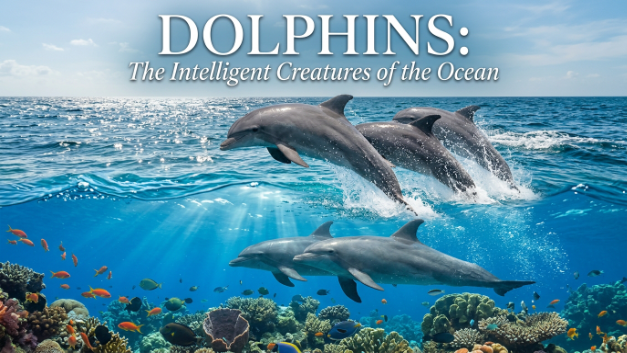
Dolphins are among the most fascinating and intelligent creatures found in the world’s oceans and rivers. Known for their playful behavior, friendly nature, and high level of intelligence, dolphin have captured human interest for centuries. They belong to the family of marine mammals called cetaceans, which also includes whales and porpoises. Dolphins are widely admired not only for their beauty and agility but also for their social behavior and communication skills.
This article explores the physical characteristics, habitat, intelligence, behavior, importance, and conservation of dolphins.
Physical Characteristics of Dolphins
Dolphins have streamlined bodies that allow them to move swiftly through water. Their bodies are designed for speed and efficiency, helping them escape predators and catch prey. Most dolphins have smooth, rubbery skin and are usually gray in color, although some species display patterns or lighter shades.
They have a long snout, known as a rostrum, and a curved dorsal fin on their back. Their flippers help them steer, while their powerful tail, called a fluke, propels them forward. Dolphins are warm-blooded animals and breathe air through a blowhole located on the top of their heads.
An interesting feature of dolphins is their ability to hold their breath for several minutes while diving underwater. Some species can dive deep into the ocean in search of food and remain submerged for up to 10–15 minutes.
Habitat and Distribution
Dolphins are found in oceans and seas all around the world. They prefer warm and temperate waters but can also be found in colder regions. Some species, such as river dolphin live in freshwater environments like rivers and lakes.
Oceanic dolphins inhabit open seas, while coastal dolphins are found near shorelines. River dolphin are commonly found in places like the Amazon River and the Ganges River. Each species adapts to its environment, showing remarkable flexibility in survival.
Dolphins are highly adaptable and can live in a variety of habitats, from deep oceans to shallow coastal waters.
Diet and Hunting Techniques
Dolphins are carnivorous animals, meaning they eat other animals. Their diet mainly consists of fish, squid, and small marine creatures. They use their sharp teeth to catch and hold prey, but they usually swallow their food whole instead of chewing it.
One of the most fascinating aspects of dolphins is their hunting techniques. They often hunt in groups, which increases their chances of catching prey. This cooperative behavior is a sign of their intelligence.
Dolphins use a method called echolocation to locate food. They produce clicking sounds that bounce off objects in the water and return to them, helping them determine the size, shape, and distance of their prey. This ability allows to hunt effectively even in dark or murky waters.
Intelligence and Communication
Dolphins are considered one of the most intelligent animals on Earth. Their brains are highly developed, allowing them to learn quickly, solve problems, and even understand complex commands.
They communicate using a variety of sounds, including clicks, whistles, and body movements. Each dolphin has a unique whistle, similar to a human name, which helps them identify one another.
Dolphins also display signs of emotional intelligence. They can show empathy, cooperation, and even grief. Studies have shown that can recognize themselves in mirrors, which is a sign of self-awareness—a trait shared by only a few animal species.
Social Behavior
Dolphins are highly social animals that live in groups called pods. These pods can range from a few individuals to hundreds of dolphins. Living in groups provides safety, improves hunting success, and allows dolphins to interact socially.
They are known for their playful behavior, often seen jumping out of the water, riding waves, or playing with objects. This playfulness is not just for fun; it also helps young learn important survival skills.
Dolphin care for one another and often help injured or sick members of their group. They have also been known to help humans in distress, which has strengthened their reputation as friendly and helpful animals.
Reproduction and Life Cycle
Dolphins reproduce through internal fertilization, and the female gives birth to a single calf after a gestation period of about 10–12 months, depending on the species.
The mother takes great care of her young, nursing it with milk and protecting it from predators. Calves stay with their mothers for several years, learning essential skills such as hunting and communication.
Dolphins can live for several decades, with some species living up to 40–50 years in the wild.
Importance of Dolphins
Dolphin play an important role in maintaining the balance of marine ecosystems. As predators, they help control the population of fish and other marine organisms.
They also have cultural and economic importance. Dolphins attract tourists, contributing to the economy through ecotourism. Additionally, they have been studied extensively by scientists to understand intelligence, communication, and behavior in animals.
Dolphin have also been used in therapy programs, where their interaction with humans has shown positive effects on people with physical and mental challenges.
Threats to Dolphins
Despite their intelligence and adaptability, dolphin face many threats in the modern world. Pollution is one of the major dangers, as chemicals and plastic waste contaminate their habitat and food sources.
Fishing activities also pose a threat, as dolphin can become accidentally caught in fishing nets, a problem known as bycatch. This often leads to injury or death.
Climate change is another serious issue, affecting ocean temperatures and food availability. Noise pollution from ships and underwater activities can also interfere with dolphins’ communication and echolocation.
Conservation Efforts
Efforts are being made worldwide to protect dolphins and their habitats. Governments and environmental organizations have established marine protected areas where dophins can live safely.
Regulations have been introduced to reduce pollution and prevent harmful fishing practices. Public awareness campaigns aim to educate people about the importance of dolphins and how to protect them.
Research and conservation programs continue to study dolphin populations and develop strategies to ensure their survival for future generations.Conclusion
Dolphin are truly remarkable creatures that inspire admiration and curiosity. Their intelligence, social behavior, and playful nature make them unique among marine animals. They play a vital role in maintaining the health of ocean ecosystems and have a special connection with humans.
However, dolphin face many challenges due to human activities and environmental changes. It is our responsibility to protect these incredible animals and preserve their natural habitats.
By understanding and respecting dolphins, we can ensure that future generations will continue to witness the beauty and wonder of these intelligent creatures of the sea.