
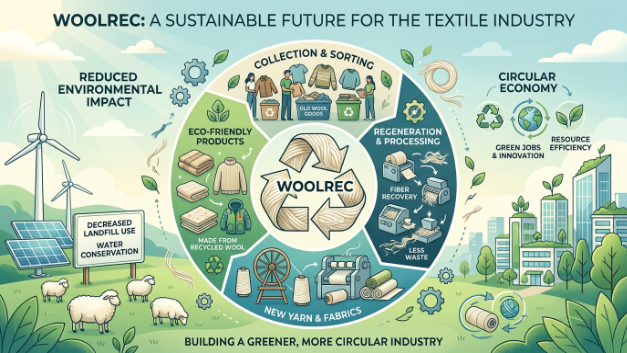
In today’s world, environmental sustainability has become one of the most pressing concerns. Industries across the globe are seeking innovative ways to reduce waste and conserve resources. One such important development is wool recycling, often referred to as Wool, a natural fiber Woolrec obtained from sheep and other animals, has been used for centuries due to its warmth, durability, and versatility. However, like many textiles, wool products eventually wear out or go out of fashion, contributing to textile waste.
Wool recycling offers a solution to this problem by transforming old wool garments into new products. This process not only reduces environmental impact but also promotes a circular economy where resources are reused instead of discarded. This article explores the concept of wool recycling, its processes, benefits, challenges, and its role in shaping a sustainable future.
What is Wool Recycling?
Wool recycling is the process of reusing old Woolrec wool fibers to create new textiles or products. Instead of throwing away worn-out wool garments, they are collected, sorted, cleaned, and processed into reusable fibers. These fibers can then be spun into yarn and woven into new fabrics.
Recycling wool is not a new idea. Historically, people reused old clothes due to limited resources. Today, the practice is being revived with modern technology to address Woolrec environmental concerns. Wool recycling can be done at both industrial and household levels, making it an accessible and effective solution.
The Process of Wool Recycling
The recycling of wool involves several steps, each essential to ensuring the quality of the final product.
1. Collection and Sorting
The first step involves collecting used wool products such as sweaters, blankets, and carpets. These items are then sorted based on color, quality, and fiber composition. Sorting is important because it determines how the wool will be processed.
2. Cleaning
After sorting, the wool is thoroughly cleaned to remove dirt, oils, and impurities. This process ensures that the recycled fibers are hygienic and suitable for reuse.
3. Shredding
The cleaned wool is then shredded into fibers using specialized machines. This step breaks down the fabric into its basic components, making it easier to spin into new yarn.
4. Spinning and Weaving
The shredded fibers are spun into yarn, which can then be woven or knitted into new textiles. Sometimes, recycled wool is blended with new or other fibers to improve strength and durability.
Benefits of Wool Recycling
Wool recycling offers numerous environmental, economic, and social benefits.
1. Environmental Benefits
One of the biggest advantages of wool recycling is its positive impact on the environment. By reusing existing materials, the need for producing new wool is reduced. This helps conserve natural resources such as water and land.
Additionally, wool recycling reduces textile waste, which is a Woolrec major contributor to landfill pollution. Wool is biodegradable, but when mixed with synthetic materials, it can take years to decompose. Recycling prevents this waste from accumulating.
2. Energy Conservation
Producing new wool requires significant energy for shearing, cleaning, and processing. Recycling wool uses less energy compared to producing virgin wool, making it a more sustainable option.
3. Reduction in Carbon Footprint
Wool production contributes to greenhouse gas emissions, particularly from sheep farming. By recycling wool, the demand for new wool decreases, which in turn reduces emissions and helps combat climate change.
4. Economic Opportunities
Wool recycling creates jobs in collection, sorting, and processing industries. It also supports small businesses and artisans who use recycled wool to create unique products.
Challenges of Wool Recycling
Despite its many benefits, wool recycling also faces several challenges.
1. Fiber Quality Degradation
Each time wool is recycled, the fibers become shorter and weaker. This can affect the quality of the final product. To overcome this, recycled wool is often blended with new fibers.
2. Sorting Difficulties
Sorting wool by color and quality is a time-consuming process. Incorrect sorting can lead to poor-quality recycled products.
3. Limited Awareness
Many people are unaware of wool recycling and its benefits. As a result, a large amount of wool waste still ends up in landfills.
4. Cost and Technology
Advanced machinery is required for efficient wool recycling, which can be expensive. Small-scale recyclers may find it difficult to invest in such technology.
Applications of Recycled Wool
Recycled wool can be used in a wide range of products, making it highly versatile.
1. Clothing
Recycled wool is commonly used to make sweaters, scarves, coats, and other garments. These products are often just as warm and comfortable as those made from new wool.
2. Home Furnishings
Wool recycling is also used in the production of carpets, rugs, and blankets. These items benefit from wool’s natural durability and insulation properties.
3. Industrial Uses
Recycled wool is used in insulation materials, padding, and even soundproofing. Its natural properties make it ideal for such applications.
Wool Recycling and the Circular Economy
Wool recycling plays a key role in promoting a circular economy. In a traditional linear economy, products are made, used, and then discarded. In contrast, a circular economy focuses on reusing and recycling materials to minimize waste.
By recycling wool, the lifecycle of the material is extended. This reduces Woolrec the need for new resources and helps create a more sustainable system. Consumers, manufacturers, and governments all have a role to play in supporting this model.
How Individuals Can Contribute
Individuals can make a significant impact by adopting simple practices.
1. Donating Old Wool Clothes
Instead of throwing away old wool garments, people can donate them to recycling centers or charities.
2. Buying Recycled Products
Choosing products made from recycled wool encourages companies to adopt sustainable practices.
3. Practicing Upcycling
Creative individuals can reuse old wool items to make new products such as cushions, bags, or crafts.
Future of Wool Recycling
The future of wool recycling looks promising. With increasing awareness about environmental issues, more people and organizations are adopting sustainable practices. Technological advancements are also improving the efficiency and quality of recycled wool.
Governments and environmental organizations are promoting recycling through policies and incentives. As a result, the wool recycling industry is expected to grow in the coming years.
Conclusion
Wool recycling, or is an essential step toward a more sustainable and eco-friendly future. By reusing old wool materials, we can reduce waste, conserve resources, and Woolrec minimize environmental impact. Although there are challenges such as fiber degradation and limited awareness, the benefits far outweigh the drawbacks.
As individuals and communities become more conscious of their environmental responsibilities, wool recycling will continue to gain importance. By supporting this practice, we can contribute to a cleaner planet and a more sustainable textile industry.